Self -Assessment
Mame Diarra Ndiaye
English 110
Self-Assessment Essay – English 110
Throughout this semester in English 110, I have grown as a writer in ways that I never expected. When the course first began, I believed writing was mostly about putting sentences together correctly and avoiding mistakes. Now I understand that writing is about purpose, audience, voice, and the choices I make to communicate clearly. Each assignment, the literacy narrative, the rhetorical analysis, and the synthesis essay, pushed me to rethink not only how I write but why I write and to who I write. Through feedback, revision, research, and reflection, I developed new habits and learned what it means to be an intentional writer.
One of the most important areas where I improved was thesis writing. At the beginning of the semester, my thesis statements were vague, broad, or simply repeated the prompt. I often struggled to identify the main point behind my ideas, especially in my literacy narrative. My professor commented that “Your thesis needed to focus on a specific moment and guide the entire essay”. That feedback was a turning point. After revising, I wrote a clearer, more meaningful claim about how writing shapes identity and that’s because I looked more at the Amy Tan article, “ Mother Tongue” as it was just as specific.Here is a picture of one of the rhetorical worksheets filled out for Mother Thong.
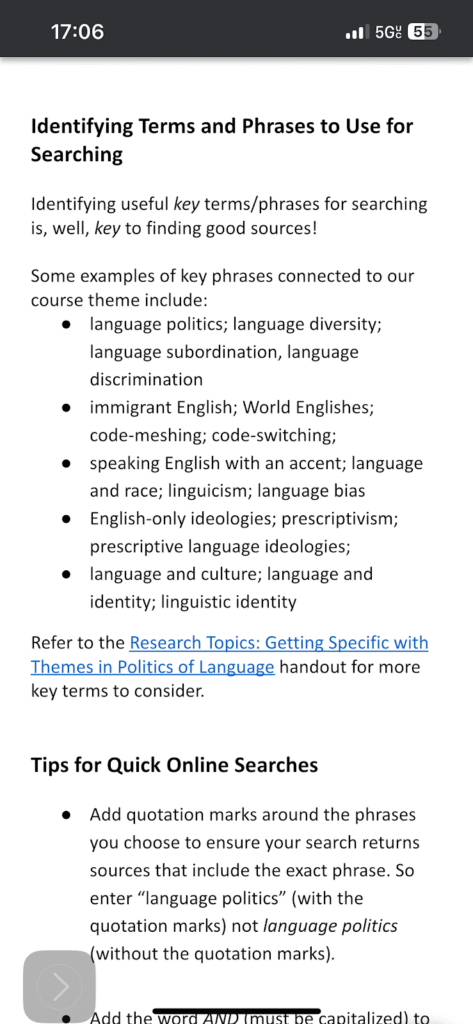
This helped me understand that a thesis is not just a sentence,it is the foundation of the structure, tone, context, purpose, and direction of the essay. This skill continued to help me later, especially in the synthesis essay, where a strong thesis kept my research organized and purposeful.
Another major area of growth was understanding the audience and genre. Before this class, I wrote every assignment in the same style without considering who would read it or why. English 110 taught me that every piece of writing has a specific purpose and must be shaped around the audience. In rhetorical analysis, for example, I learned to identify how authors make decisions about tone, style, and argument to connect with their readers. The text “Should Writers Use Their Own English?” especially opened my eyes to how language, identity, and credibility are connected. It helped me realise that writing is not about trying to sound “professional”; it is about expressing a message honestly and effectively based on who the audience is and what they need.
The synthesis essay was the assignment that challenged me the most. Research used to scare me because I didn’t know how to choose good sources or how to blend them with my own thoughts. I didn’t want to sound like I was just copying facts, but I didn’t want to sound unprepared either. First I received feedback from my peer reviewer, which is below.At first I felt frustrated, like I wasn’t doing anything right. But after letting myself breathe, I went back to my draft and tried again. I added more of my own perspective, explained why the sources mattered, and connected them to my real experiences. But again that didn’t make it good enough as I saw my professor.
After I saw this without reading it, everything felt off. I really wanted to give up because I put a lot of effort before receiving her feedback, but then I thought, “why not” maybe after correcting this, I could get “a perfect” from her. That moment showed me that research isn’t about stacking quotes on top of each other. It’s about finding the balance between my voice and the voices of others, but also as long as it is I need a specific audience. Learning this helped me feel less afraid of academic writing and more confident that I have something valuable to say.
Feedback played a major role in my growth this semester. Peer review helped me see my writing from new perspectives, revealing confusing sentences, missing details, or unclear ideas I did not notice myself. My professor’s comments were also essential because they explained not only what to improve, but why those changes would make my writing stronger and the course of this class was clear and helped a lot.
Over time, I began revising my drafts more intentionally, thinking about clarity, depth, and organization instead of just correctness. I used to feel discouraged when I received a lot of feedback, but I now understand that revision is a normal and necessary part of writing, not a sign of failure. It is an opportunity to make my work clearer and more meaningful.
Looking back, my understanding of writing has changed more than I expected. I started this class thinking good writing meant sounding formal and avoiding mistakes. Now I know writing is about connection, identity, discovery, about choosing how I want to express myself, and understanding who I’m speaking to. The literacy narrative helped me look inward and helped me reflect on my personal experiences. The rhetorical analysis taught me to look outward and see the techniques other writers use. The synthesis essay taught me how to join larger conversations with confidence, using research and my own interpretation. Together, these assignments showed me that writing is not just something I do for school, it’s part of how I express who I am, that writing is flexible, purposeful, and deeply connected to who I am.
In conclusion, English 110 helped me grow as a writer in meaningful ways. I strengthened my thesis writing, improved my understanding of genre and audience, and learned how to use research effectively. Most importantly, I learned to value feedback and revision as essential tools for improvement. I leave this course with more confidence in my writing abilities and a better understanding of my voice and that’s thanks to my professor Amy.These lessons she provided will continue to guide me not only in future classes but in any writing I do beyond college.

This entry is licensed under a Creative Commons Attribution-NonCommercial-ShareAlike 4.0 International license.

